Home vs. In-Center Dialysis: Understanding Your Treatment Options
06/30/2026
If you or a loved one has been diagnosed with chronic kidney disease (CKD) or end-stage renal disease (ESRD), you may be wondering which type of dialysis is right for you.
Dialysis is a life-sustaining treatment that helps remove excess fluid, toxins, and waste products from the blood when the kidneys can no longer function properly. In the U.S., more than 808,000 people are living with end-stage kidney disease, also called ESRD, and about 68% receive dialysis, according to the National Institute of Diabetes and Digestive and Kidney Diseases (NIDDK).
Choosing between home dialysis and in-center dialysis is a major decision that impacts your health, lifestyle, and overall well-being.
Types of Dialysis: Home vs. In-Center
Dialysis is a treatment that removes waste, toxins, and excess fluid from the blood when the kidneys are no longer able to do so effectively. There are two main types of dialysis, each with different methods of filtering the blood:
- Hemodialysis (HD) – This method uses a dialysis machine and a special filter called a dialyzer (artificial kidney) to clean the blood. Blood is drawn from the body, passed through the dialyzer, and then returned to the bloodstream. Hemodialysis can be performed in a dialysis center (in-center dialysis) or at home (home hemodialysis).
- Peritoneal Dialysis (PD) – Instead of using a machine, PD relies on the lining of the abdomen (peritoneum) and a special cleansing fluid called dialysate to remove waste. The fluid is introduced into the abdomen through a catheter, absorbs waste from the blood, and is then drained out. Residual kidney function can help improve outcomes and fluid management for some PD patients, but the right dialysis prescription depends on each patient’s medical condition and should be determined by a nephrologist.
1. In-Center Hemodialysis (Traditional Facility Dialysis)
- Performed at a dialysis clinic under the supervision of a nephrologist and dialysis care team.
- Typically scheduled three times a week for about 3–5 hours per session.
- Uses a dialysis machine and dialyzer to filter waste from your blood.
- Requires traveling to a dialysis center multiple times a week.
- A dialysis care team, including nurses and technicians, assists with treatment.
- Often results in larger fluid shifts, which may cause fatigue, dizziness, or muscle cramps after sessions.
2. Home Hemodialysis (Home HD)
- Performed in the comfort of your own home with the help of a trained care partner or independently (for some patients).
- Can be done more frequently (5–7 times a week), offering short daily hemodialysis or nocturnal home hemodialysis (longer sessions overnight while you sleep).
- Provides gentler treatment with better control over fluid removal, leading to fewer dietary and fluid restrictions.
- Requires training and space for equipment but allows more independence and flexibility.
- May reduce exposure to germs in a busy dialysis center, although infection prevention remains important with any dialysis access.
Key Benefits of Home Hemodialysis
Many dialysis patients prefer home hemodialysis over in-center dialysis because it offers:
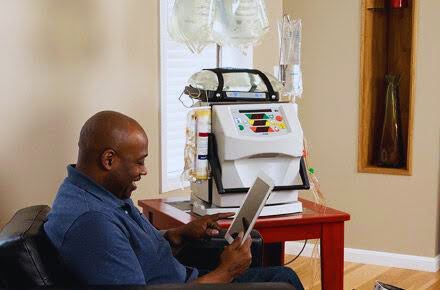
- More flexibility—Dialysis can be done at home on your own schedule.
- Better health outcomes—Frequent dialysis helps remove more waste and excess fluid, keeping blood levels stable.
- Fewer dietary and fluid restrictions—Patients can often drink more fluids and eat a less restrictive diet.
- Greater independence—No need to rely on transportation to a dialysis center.
- Lower infection risk—You’re not exposed to germs and infections in a busy dialysis unit.
Which Dialysis Option Is Right For You?
Choosing between home hemodialysis (HHD) and in-center dialysis impacts your lifestyle and health. While both provide life-sustaining treatment, home hemodialysis offers more flexibility, better health outcomes, and greater independence.
Key Factors to Consider
- Medical Condition – Patients with severe heart disease may require in-center care, but home HD provides gentler, more frequent treatment that improves heart health.
- Lifestyle Preferences – Home HD allows flexible scheduling, while in-center dialysis requires fixed appointments three times a week.
- Support System – A care partner helps, but many patients successfully perform solo home dialysis after training.
- Training Commitment – Home HD requires learning to operate the machine, but the benefits include better energy, fewer restrictions, and improved well-being.
Insurance Coverage and Support
Most dialysis treatment options, including home and in-center dialysis, are covered by Medicare, Medicaid, and many private insurance plans.
Explore dialysis insurance coverage and what’s included
Understanding your insurance benefits can help you make a confident, informed decision about the best dialysis option for your needs.
Next Steps: Talk to Your Nephrologist
Choosing a dialysis treatment is a significant decision. Your nephrologist or kidney care team can help assess your individual needs.
Whether you choose in-center hemodialysis, nocturnal home hemodialysis, or frequent daily home dialysis, the goal is to maintain the best possible health and quality of life.
If you’re considering home dialysis, talk to your doctor today to see if it’s the right option for you.
Frequently Asked Questions
For some patients, home dialysis may offer more flexibility, more frequent treatment options, fewer post-treatment symptoms, and fewer diet or fluid restrictions. However, it is not the best choice for everyone. Your nephrologist can help determine whether home dialysis or in-center dialysis is safer and more appropriate for your condition.
Home dialysis requires training, storage space for supplies, careful infection prevention, and a comfort level with managing treatment at home. Some patients also need a care partner, depending on their treatment plan and medical needs.
Neither option is automatically better for everyone. Home hemodialysis uses a machine to filter the blood, while peritoneal dialysis uses the lining of the abdomen and dialysate fluid. The best choice depends on your health, lifestyle, support system, home environment, and your nephrologist’s recommendation.
Peritoneal dialysis may be less common because not every patient is a candidate, and some people are uncomfortable managing daily treatments at home. Other factors can include infection concerns, abdominal surgeries, hernias, limited home support, storage space, or a lack of early education about home dialysis options.

Dr. Allen Kaufman is the Chief Medical Officer and Senior VP for Clinical & Scientific Affairs at Dialyze Direct, with over four decades of experience in Nephrology. He began his career in 1980 and has held leadership roles including Chief of Nephrology & Hypertension at Beth Israel Medical Center (1998–2004), Chief of Dialysis at the Bronx VA Medical Center (1982–1990), and Chief of the Yorkville Dialysis Unit at Beth Israel and the Renal Research Institute (1990–2000). Dr. Kaufman has authored over 100 scientific publications and served as Principal or Co-Investigator on numerous NIH-funded research studies. A Fellow of the American College of Physicians, he is board-certified in Nephrology and Internal Medicine. He earned his medical degree from the University of Rochester and completed training at the Hospital of the University of Pennsylvania and Mount Sinai in New York. Dr. Kaufman is widely recognized with multiple “Best Doctor” and “Patients’ Choice” awards.