Fluid Management in Kidney Disease: Balancing Intake and Preventing Complications
10/09/2026
Did you know that too much or too little fluid in your body can be dangerous if you have kidney disease? Your kidneys help remove extra fluid and waste, but when they don’t work properly, fluid can build up and cause serious problems.
If you drink too much water, your body can’t get rid of the excess, leading to swelling, high blood pressure, and even heart failure. If you don’t drink enough water, you may become dehydrated, which can harm your kidneys and lead to kidney failure.
This article will help you understand:
- How kidneys manage fluid in the body
- What happens when fluid balance is disrupted
- How to manage fluid intake in kidney disease
Understanding Fluid Balance in Kidney Disease
How Do Healthy Kidneys Manage Fluid?
Your kidneys filter about 50 gallons of blood each day to remove waste and excess fluid. This waste is sent out of the body as urine. The kidneys work with your brain and hormones to make sure your body has the right amount of fluid. When you drink too much water, your kidneys make more urine to get rid of the extra fluid. When you don’t drink enough, they hold onto water to prevent dehydration.
What Happens in Kidney Disease?
When your kidneys don’t work properly, they struggle to remove extra fluid. This can lead to:
- Swelling in the legs, feet, and hands
- Shortness of breath due to fluid in the lungs
- High blood pressure
- Heart problems
On the other hand, not drinking enough water can also cause problems, such as:
- Dehydration, which makes kidney function worse
- Kidney stones, due to a lack of water to flush out minerals
- Acute Kidney Injury (AKI) – a sudden worsening of kidney function due to low blood flow
Managing the right amount of fluid intake is essential for patients with chronic kidney disease (CKD). This becomes especially important as kidney function worsens, particularly in patients undergoing renal dialysis.
Research shows that for patients with CKD, fluid overload significantly increases the risk of cardiovascular events. For those in stages 4 and 5 CKD, fluid intake is often restricted to about 1–1.5 liters per day (National Kidney Foundation, 2020). Source: National Kidney Foundation.
How Different Kidney Conditions Affect Fluid Balance
Chronic Kidney Disease (CKD)
In early CKD, the kidneys still function but may not remove water as efficiently. Some people need to reduce their salt intake to avoid retaining extra water. In advanced CKD and end-stage renal disease (ESRD), the kidneys lose more function, and fluid restriction may be necessary to prevent fluid overload, swelling, and heart complications.
What can help?
- Limiting salt intake (less than 2g per day) reduces thirst and fluid retention.
- Drinking the right amount of fluid as advised by your doctor.
- Using diuretics (water pills) – These help remove extra fluid but may not work in severe CKD.
Dialysis Patients
People on dialysis cannot remove fluid through urine, so they must limit how much they drink to prevent fluid buildup between treatments.
For those considering more flexibility in fluid management, home dialysis offers an alternative approach that can help maintain balance. Learn more about home dialysis options here.
Fact: According to the National Kidney Foundation (NKF), patients with CKD in stages 4 and 5 may need a restricted fluid intake, often around 1–1.5 liters per day, to manage fluid retention and reduce the risk of cardiovascular events (NKF, 2020).
Fluid Intake for Dialysis Patients
Hemodialysis patients should limit fluid intake to 1–1.5 liters per day, depending on how much urine they still produce.
Signs of too much fluid on dialysis:
- Weight gain between dialysis sessions
- Swelling in legs, hands, or face
- Difficulty breathing due to fluid in the lungs
Acute Kidney Injury (AKI)
AKI is a sudden kidney problem that can occur due to illness, dehydration, or severe infections like sepsis. In patients with AKI, doctors may need to adjust fluid resuscitation and carefully manage fluid overload. Fluid therapy is often required to support renal perfusion and maintain adequate blood flow to the kidneys.
Sepsis & Critically Ill Patients
In critical care, sepsis or septic shock can cause kidney failure. In these cases, intravenous fluid therapy (IV) is given to restore blood pressure and prevent further kidney damage. However, excessive IV fluids can lead to fluid overload, further compromising kidney function. The choice of fluid, such as saline or Plasma-Lyte®, is crucial in managing fluid balance.
Managing Fluid Intake in Kidney Disease
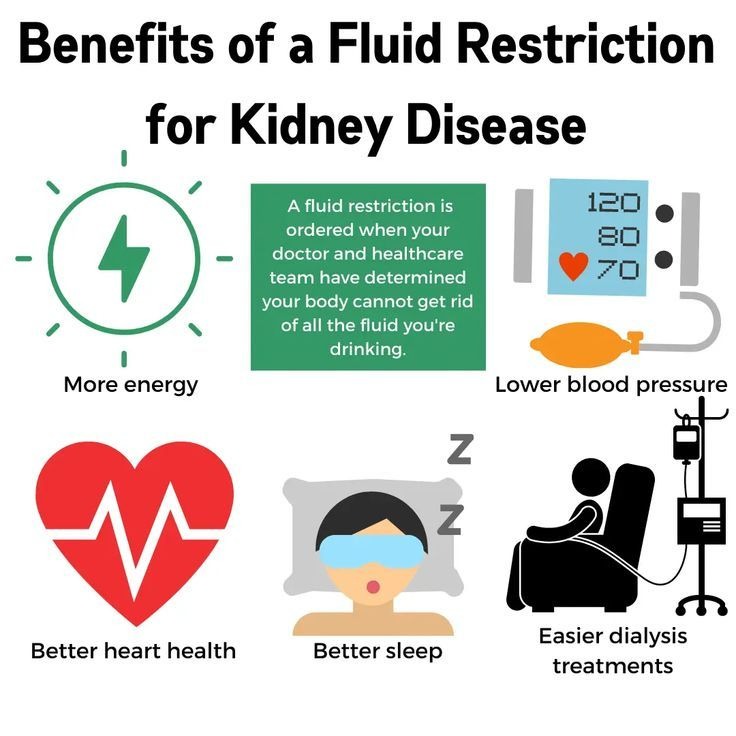
Proper fluid management is essential for people with kidney disease. Some patients need to limit their fluid intake, while others may need additional fluids to stay hydrated. Knowing when to restrict fluids and when to increase intake can help prevent complications and improve health outcomes.
A. Fluid Restriction – When and Why?
Why Do Some Kidney Patients Need to Limit Fluids?
When kidneys aren’t working properly, extra fluid builds up in the body because it isn’t being removed through urine. This fluid overload can cause:
- Swelling (edema) – Especially in the legs, feet, hands, and around the eyes.
- High blood pressure – Too much fluid increases blood volume, leading to hypertension.
- Shortness of breath – Extra fluid can accumulate in the lungs, making it harder to breathe.
- Heart failure – Excess fluid makes the heart work harder, increasing the risk of cardiac problems.
Who Needs Fluid Restriction?
- Patients with advanced CKD – As kidney function declines, the kidneys can’t remove as much fluid.
- Dialysis patients – Fluid intake must be controlled between dialysis treatments.
- People with heart failure – Fluid overload can worsen heart conditions.
Managing Thirst During Fluid Restriction
Managing thirst can be challenging, but reducing sodium intake can help. Try strategies like sucking on ice chips or drinking from small cups to control fluid consumption. Tracking fluid intake, including hidden fluids in food, is also crucial.
B. Fluid Resuscitation- When Extra Fluids Are Needed
Who Needs Extra Fluids?
Some kidney patients require extra fluids for hydration and supporting organ function, especially in critical care settings. This includes:
- Severe dehydration due to vomiting, diarrhea, or excessive sweating.
- Patients with sepsis who need IV fluids for resuscitation.
- Low blood pressure or blood loss, where fluids are necessary to restore blood volume and prevent kidney damage.
Types of IV Fluids Used for Resuscitation
The type of fluid administered during fluid resuscitation depends on the patient’s condition. Normal saline and balanced solutions like Plasma-Lyte® 148 are commonly used, though too much saline can worsen kidney function by causing hyperchloremic acidosis.
Preventing Fluid Overload in Kidney Disease
Signs of Fluid Overload:
- Swollen ankles, feet, or hands
- Weight gain in a short time
- Shortness of breath, especially when lying down
- High blood pressure
How to Avoid Fluid Overload:
- Monitor daily weight – Rapid weight gain may indicate fluid retention.
- Follow a low-sodium diet to reduce fluid retention.
- Take prescribed medications like diuretics to help eliminate excess fluid when appropriate.
Finding the Right Fluid Balance
Proper fluid management in patients with kidney disease is essential for maintaining kidney and heart health. Whether it’s fluid restriction for patients with chronic kidney disease or fluid resuscitation for those in intensive care, finding the right balance is key.
Whether you’re managing fluid for kidney disease patients, recovering from acute kidney injury, or undergoing dialysis, working with your healthcare team is crucial to ensure optimal outcomes. Understanding how much fluid to take in, what type of fluid therapy is needed, and when to restrict or resuscitate fluids can make all the difference in managing kidney disease effectively.
Frequently Asked Questions
Limit drinks high in sodium, potassium, or phosphorus, depending on your kidney function. Some sodas, energy drinks, and fruit juices may require restriction. Ask your healthcare provider for personalized guidance.
The best IV fluid depends on your condition, electrolyte levels, and hydration status. Balanced crystalloids, such as Plasma-Lyte, may be appropriate in some cases. Fluid selection requires medical supervision.
Water supports hydration, but no drink can repair damaged kidneys directly. Your ideal fluid intake depends on kidney function, urine output, and other conditions. Follow your healthcare provider’s fluid recommendations.
Fluid restrictions vary depending on kidney function, urine output, swelling, and dialysis status. Some patients need limits, while others do not. Follow your healthcare provider’s individualized fluid plan rather than a fixed daily amount.
Information contained in this blog is for informational or educational purposes only and does not substitute professional medical advice or consultations with healthcare professionals. The content is not intended to be comprehensive or exhaustive, and it does not apply to any specific individual’s medical condition. Always refer to the personalized information given to you by your doctor, or contact us directly.

Dr. Allen Kaufman is the Chief Medical Officer and Senior VP for Clinical & Scientific Affairs at Dialyze Direct, with over four decades of experience in Nephrology. He began his career in 1980 and has held leadership roles including Chief of Nephrology & Hypertension at Beth Israel Medical Center (1998–2004), Chief of Dialysis at the Bronx VA Medical Center (1982–1990), and Chief of the Yorkville Dialysis Unit at Beth Israel and the Renal Research Institute (1990–2000). Dr. Kaufman has authored over 100 scientific publications and served as Principal or Co-Investigator on numerous NIH-funded research studies. A Fellow of the American College of Physicians, he is board-certified in Nephrology and Internal Medicine. He earned his medical degree from the University of Rochester and completed training at the Hospital of the University of Pennsylvania and Mount Sinai in New York. Dr. Kaufman is widely recognized with multiple “Best Doctor” and “Patients’ Choice” awards.